
Run them against the exact SKU, packaging and shipment date.
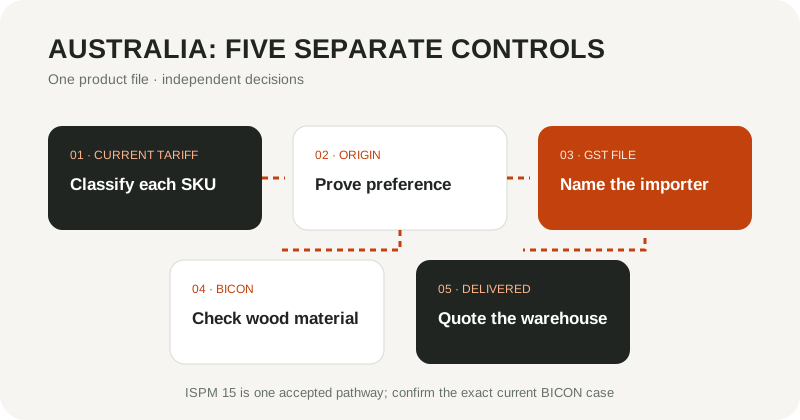
Bottom line: classification, preference and biosecurity are separate decisions. The importer should preserve the evidence for all three and price the actual route to the warehouse.
5 official checks for Australia
- Build a product sheet for each SKU.
- Verify the code in the ABF current tariff.
- Test any preferential-origin claim and review origin advice when certainty is needed.
- Confirm importer, declaration and GST records under the ABF import requirements.
- Check timber packaging in BICON and quote the current route.
Classify each product family separately
Plastic clips, reusable levelers, mixed-material pliers, retail kits and powered tools do not present the same customs facts. Record material, function, net weight, photos, origin and set presentation. Keep the dated rationale with the invoice and ask for tariff advice when a material uncertainty affects repeated imports.
Do not let one supplier code propagate across the catalogue. A kit may need a different analysis from its individual parts, and a powered product can bring additional requirements. Reopen the file whenever the composition, function or retail presentation changes.
Origin preference needs shipment evidence
A China origin label alone does not prove eligibility for preferential tariff treatment. Match the exact classification to the current agreement rule, confirm how the product meets it and retain the required origin evidence. If the evidence is incomplete, model the non-preferential result as a separate scenario rather than hiding the assumption.
GST and landed cost use separate lines
Show goods value, origin charges, freight, insurance, customs value, duty, GST, border and broker charges, inspection or treatment, destination handling and inland delivery separately. Identify the importer of record, currency, exchange-rate date and exclusions. GST credits and cash timing depend on the importer's position and records, so confirm them with the importer or adviser.
Wood packaging: use the exact BICON pathway
The Department of Agriculture states that solid timber packaging can comply through ISPM 15 or approved alternative treatments in BICON. Processed wood products can fall outside the solid-timber requirements. Identify pallets, crates, dunnage and chocks before loading, then check the current BICON case for material, treatment, marking and documentation.
Noncompliant packaging can be treated, exported or destroyed at the importer's cost. Photograph marks and retain treatment evidence with the packing file. Avoid describing every pallet as automatically requiring one mark without first identifying its material.
Route comparison starts with final packaging
Compare current sailing, transshipment, destination port charges, free time, customs and biosecurity support, and inland delivery to the warehouse. Use final carton dimensions and gross weight. A port-to-port transit estimate excludes consolidation, border holds and receiving, so state each milestone instead of promising one universal number.
Private label and receiving close the file
Freeze model, joint size, origin, pieces per bag, importer details, warnings and carton marks before artwork release. Keep an approved PDF and photographed production sample. At receipt, count cartons by SKU, open a defined sample, verify labels and pack counts, and quarantine damage or substitutions before distribution.
Six records to retain
- SKU facts and approved sample
- Tariff and origin rationale
- Importer, declaration and GST instructions
- BICON packaging assessment and treatment evidence
- Invoice, packing list and transport document
- Entry, landed-cost and receiving reconciliation
Review our tile leveling clips, tile leveling wedges and tile leveling system wholesale supplier pages, then use the landed-cost method.
Frequently asked questions
What tariff code applies to tile leveling systems in Australia?
Classify each SKU from its composition, function and presentation under the current Australian tariff. Plastic clips, mixed-material pliers, kits and powered tools should be reviewed separately; an importer can seek tariff advice when certainty is needed.
Does ChAFTA automatically make every shipment duty-free?
No. Preferential treatment depends on the exact classification, origin rule and valid origin evidence for that shipment. Verify the current tariff and agreement requirements rather than applying one rate to the complete product range.
Must every wooden pallet carry an ISPM 15 mark?
Australia accepts ISPM 15 compliant solid timber packaging and also lists approved alternative treatments in BICON; some processed wood products are exempt. Check the exact packaging material and current BICON case before dispatch.
How long does shipping from China to Australia take?
Use a current quote tied to the cargo-ready date, service, transshipment, destination port, border processing and final delivery. A historical port range is not a door-to-warehouse commitment.