
Bottom line: Canada import planning works best as a five-step evidence chain. Classification determines tariff treatment; the importer uses CARM for accounting and payment; the shipment file supports value, origin, tax, packaging, and release.
Import Tile Leveling Systems to Canada in 5 Steps
- Describe each SKU. Record material, function, components, dimensions, photos, origin, and whether products arrive individually or as a kit.
- Verify classification. Use the effective edition on the official CBSA Customs Tariff. Save the tariff item, treatment, notes, edition, and check date.
- Set up the importer. Confirm the business number, import-export account, CARM access, broker delegation, security when applicable, and payment process.
- Build the shipment file. Align invoice, packing list, origin, valuation, tax, transport, and packaging records with the declared SKU facts.
- Price the door route. Compare current offers to the same Canadian postal code and include destination handling, inland transport, appointments, and quote expiry.
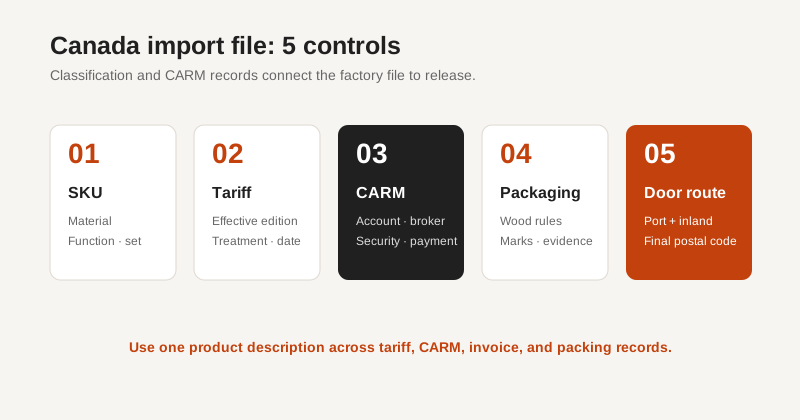
Why the Current Tariff Edition Matters
The tariff schedule can be amended, and different materials or configurations can lead to different headings. A plastic break-off clip, reusable leveler with metal parts, hand tool, and mixed retail set should not inherit one code merely because all are used during tile installation.
CBSA's classification guide points importers to the tariff, the CARM classification tool, and advance rulings. When the code materially changes margin or repeat-order risk, an advance ruling provides a stronger basis than an old invoice.
3 CARM Decisions to Finish Before Cargo Departs
First, identify the legal importer and confirm its import-export account. Second, make sure the customs broker is delegated correctly in CARM; appointing a broker does not transfer the importer's responsibility. Third, decide how duties and taxes will be secured and paid so release is not delayed by incomplete setup.
The accounting file should connect the purchase transaction to the declared value, tariff treatment, origin, and taxes. Keep the decision trail with the tile leveling clip specification so repeat shipments use the same underlying facts.
Taxes, Valuation, and Landed Cost
A landed-cost sheet should separate product value, relevant customs-value additions, duty, GST or other applicable tax treatment, brokerage, freight, destination charges, inland delivery, and warehouse costs. Some amounts may be recoverable or treated differently depending on the importer, so accounting treatment should be confirmed rather than presented as a universal cost.
Put a date beside the tariff, exchange rate, freight offer, and tax assumption. This lets the buyer update a moving input without rewriting the model and prevents an ocean rate from being mistaken for full cost to a Toronto, Montréal, Calgary, or Vancouver warehouse.
Wood Packaging and Pallet Choice
The Canadian Food Inspection Agency regulates nonmanufactured wood packaging because it can carry forest pests. The CFIA wood-packaging guidance explains requirements and lists exemptions for materials such as processed wood, plastic, and cardboard. Confirm the actual pallet and dunnage before loading.
If solid wood is used, preserve the treatment and marking evidence required for the route. Photograph pallet marks and the sealed load. If plastic or compliant processed-wood pallets are used, show that material clearly on the packing specification.
Route Selection Is a Door-Cost Decision
Vancouver can suit western distribution, while another gateway may fit central or eastern inventory. The useful comparison is current door cost and replenishment risk: sailing, transshipment, rail or truck leg, terminal handling, free time, examination exclusions, appointment rules, and final delivery.
For an initial wholesale order, LCL may reduce stock exposure but adds consolidation and destination handling. A container can improve handling efficiency once the product mix and warehouse throughput justify it. Use the same carton dimensions and destination when comparing offers.
Frequently Asked Questions
What tariff code applies to tile leveling systems in Canada?
No single tariff item safely covers every clip, wedge, reusable leveler, plier, or mixed set. Classify the exact SKU by material, construction, function, and packaging using the effective CBSA Customs Tariff. Consider an advance ruling when uncertainty affects repeat orders.
What must a Canadian importer complete in CARM?
The legal importer should have the correct business and import-export accounts, portal access, broker delegation, security when applicable, and a process for accounting and payment. The broker can file transactions, but the importer remains responsible.
Do pallets for Canada need ISPM 15 treatment?
Nonmanufactured wood packaging is regulated and must meet the rules applying to its origin and route. CFIA lists exemptions for processed wood, plastic, and cardboard. Confirm the pallet and dunnage, then retain treatment or material evidence.
Which Canadian port is best for tile tool imports?
Choose by current door cost and replenishment risk. Compare sailing and transshipment, rail or truck, terminal charges, free time, examination exclusions, warehouse appointment, and final postal code.