
Search every SKU in SABER before production documents and packaging are frozen.
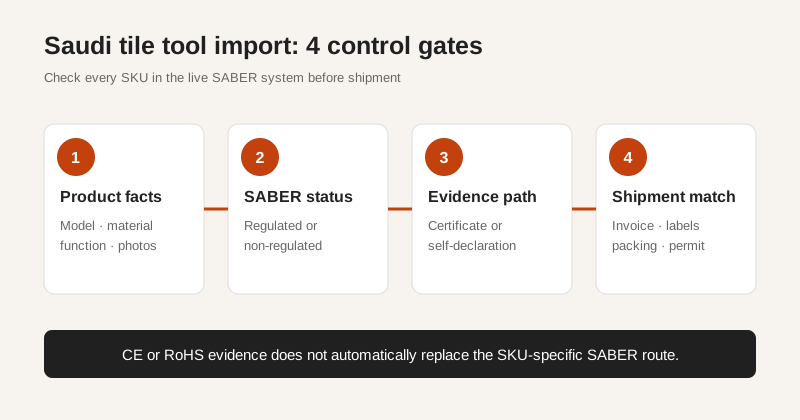
Bottom line: The Saudi importer should confirm each SKU's live SABER route before shipment. Product registration, technical evidence, shipment processing and customs records must describe the same model.
4 SABER decisions before importing tile leveling systems
- Identify the exact product. Record composition, function, model, photos and whether the item is sold alone or in a kit.
- Check live product status. Use the official SABER platform by HS code and keyword rather than reusing a status from another SKU.
- Follow the assigned route. Regulated products use the applicable technical-regulation and conformity path. The official non-regulated product guidance still requires registration, importer self-declaration and a shipment certificate.
- Reconcile the shipment. Match product and certificate records to invoice, packing list, transport document and physical labels.
Regulated and non-regulated are different workflows
A regulated result means the importer must follow the technical regulation shown for that product and obtain the evidence the platform requests. A non-regulated result means a third-party product conformity certificate may not be the route, but the product is not invisible to the system. SABER describes registration, self-declaration and shipment-certificate steps for non-regulated goods.
Save the search result and date with the order file. Recheck when the model, material, function or HS classification changes. Powered suction equipment should never inherit the status of a passive plastic clip merely because both are sold by the same tile-tool supplier.
Certificate cost and timing must come from the live case
SABER publishes platform service information, while conformity-assessment charges and review time can depend on product status, regulation, model count, assessment body and missing evidence. Quote the actual application instead of carrying an old dollar range or promised number of days into the landed-cost model. Record platform charges, assessment charges, testing, translation and broker work as separate lines.
Arabic labeling and model identity
Freeze the Arabic and English product name, importer or supplier details, origin statement, model, count and any required warnings before printing. The importer should confirm which labeling rules apply to the product's current status. Artwork approval does not prove platform approval, and a certificate for one model should not be used for an unreviewed substitute.
A 6-record Saudi shipment file
- SKU facts and classification rationale
- Dated SABER product-status result
- Applicable declaration, certificate or technical evidence
- Approved bilingual artwork and model list
- Commercial invoice and SKU-level packing list
- Shipment certificate, transport and customs release records
Choose Dammam or Jeddah with current route data
Port choice should follow the final warehouse and current service. Ask for the cargo-ready date, transshipment, destination charges, customs support and inland delivery. Requote after volume or ready-date changes. Fixed port-to-port transit ranges omit consolidation, clearance and inland handoff.
Review our tile leveling clips, tile leveling wedges and tile leveling system wholesale supplier pages, then place the confirmed regulatory and freight inputs in the tile leveling landed-cost method.
Assign responsibility before the purchase order
The factory supplies accurate product facts, model lists, packing data and requested technical evidence. The Saudi importer controls the SABER account, product-status decision, local declarations and customs instructions. A conformity body assesses only the scope for which it is appointed, while the broker submits entry data from the approved file. Put these handoffs in writing so a missing certificate or mismatched model is found before cargo release.
Receiving is the final conformity check
At the warehouse, match carton marks and model names to the shipment certificate and packing list. Count cartons by SKU, inspect bilingual labels and isolate damaged or substituted goods. A customs release confirms the entry process; it does not prove that every packed model matches the approved product record.
Frequently asked questions
Does every tile leveling product follow the same SABER path?
No. Search every clip, wedge, plier, kit or powered tool by HS code and keyword in SABER. Regulated products and non-regulated products use different evidence routes, although both may require product registration and shipment processing.
Does a CE or RoHS document replace SABER requirements?
No. A foreign report may support the technical file when relevant, but the Saudi importer must follow the current product-specific SABER status and applicable technical regulation.
What does a non-regulated SABER status mean?
SABER states that non-regulated products still need platform registration, an importer self-declaration and a shipment certificate. Non-regulated does not mean no import record.
Which Saudi port should an importer use?
Select the port after comparing the current sailing, destination charges, clearance support and inland delivery to the final warehouse. A port name alone does not determine total cost or delivery time.