
Bottom line: France runs on EU rules — TARIC 3926.90.97 at 6.5% duty, EORI registration, CE marking — but its 2022 VAT reform makes it the calmest big market in Europe for cash flow: the 20% import TVA is declared and deducted on the same CA3 return, so nothing is paid upfront at customs. A 500-bag LCL trial to Le Havre lands around €830–1,160 all-in, Le Havre runs 30–38 days from Ningbo, and the mix that sells is the classic one — clips and wedges carrying about 85% of volume, Spin Doctor covering wall-tile work.
Since January 2022 the 20% TVA is self-assessed (autoliquidation) on your CA3 return; Le Havre runs 30–38 days from Ningbo.
France's 2022 VAT Reform Rewrote Landed-Cost Math
Before 2022, importers into France either paid import VAT at clearance or needed a special authorization to avoid it. The 2022 Finance Act (Article 1695 of the CGI) made reverse charge — autoliquidation de la TVA à l'importation — automatic and mandatory for every business registered for French VAT. Import VAT is no longer a customs payment at all: you declare it on your periodic CA3 return and deduct it on the same form, so the net cash impact is zero. Sources: valoris-avocats.com, avalara.com — French import VAT reform, retrieved Sep 2026
For a distributor's cash flow the difference is easy to size. On a full 20ft container of clips and wedges — roughly 15,000+ bags at our FOB pricing — a 20% VAT charge on the duty-inclusive value would otherwise park five figures of working capital at the port for the weeks between clearance and VAT refund. Under autoliquidation that money never leaves your account. Two practical notes: your customs declaration must carry the correct VAT option statement, and invoices for imported goods show both VAT numbers with import VAT excluded. Your French fiscal representative or accountant handles both as routine.
What has not changed: the 6.5% EU duty on TARIC subheading 3926.90.97 for China-origin goods, the €150 duty de minimis for small consignments, and the EORI number your company needs before the first shipment. Register via the French customs portal; it is free and typically takes a few business days.
What a 500-Bag Trial Order Costs in France
We recommend every new French distributor start with a 500-bag LCL trial: 300 bags of tile leveling clips (200×1.5mm + 100×2.0mm — the two sizes that cover most French floor work), 150 bags of tile leveling wedges, and 50 bags of Spin Doctor for wall-tile customers.
⚖️ Guide prices are FOB Ningbo at MOQ and subject to raw material cost fluctuations — contact us for current pricing.
| Cost component | Amount | Basis |
|---|---|---|
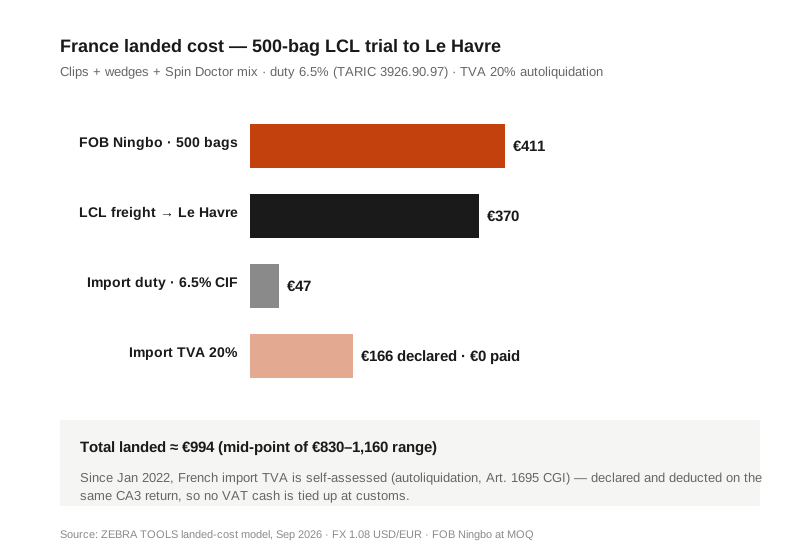
| FOB Ningbo (500 bags) | ≈ $444 | clips $0.70–0.85/bag · wedges $0.80–1.00/bag · Spin Doctor $1.45–1.60/bag |
| LCL freight to Le Havre | $300–500 | 8 cartons, China→North France LCL rates |
| Import duty | ≈ $48–61 | 6.5% on CIF (TARIC 3926.90.97) |
| Import TVA 20% | ≈ €150–195 (declared, not paid) | autoliquidation on CA3 — net cash €0 |
Total landed cost lands in the €830–1,160 range with duty and freight in. At typical 35–55% distributor markup, that first pallet generates €290–630 of gross margin — and, more valuably, tells you which clip thickness your installers reorder. Source: ZEBRA TOOLS landed-cost model — EU TARIC 6.5% duty on CIF + 20% TVA autoliquidation, LCL China→France rates. Sep 2026.
Le Havre, Antwerp or Rotterdam — Getting the Container to Your French Customers
| Port | Ningbo Transit | Best For |
|---|---|---|
| Le Havre (FR) | 30–38 days | Paris basin, Normandy, West France — France's largest container port (~3.0M TEU/yr) |
| Antwerp (BE) | 30–40 days | North/East France re-distribution, +1–2 days truck |
| Rotterdam (NL) | 30–40 days | Northern France via bonded truck, +1 day |
Le Havre is the default: direct weekly services from Ningbo (~34 days on current schedules — Flexport route data, retrieved Sep 2026), 2–3 days clearance, and next-day trucking into the Paris basin where tile distribution concentrates. Antwerp and Rotterdam only win when your warehouse sits in the north or east, or when you consolidate French and Benelux volume into one container. Southern distributors served through Fos-sur-Mer should compare Med-loop transits with their forwarder — schedules differ by carrier and season.
The Product Mix That Sells in France
French tile practice runs on medium and large formats — 30×60, 60×60 and growing 60×120 shares — at roughly 4 clips per square meter on 60×60 work (≈11 clips/m²). The reorder pattern we see from French distributors:
| Product | SKU | Share of first orders | French market note |
|---|---|---|---|
| Tile Leveling Clips | BM-021, 10 models | ~60% | 1.5mm and 2.0mm dominate; compatible with Raimondi/Rubi wedges French pros already own |
| Tile Leveling Wedges | BM-C01, 11 models | ~25% | Reusable PE, 100+ cycles; margin accessory |
| Spin Doctor | BM-S01, 2 models | ~15% | Wall-tile specialist; twist-off, no hammering |
Round out the range after the first reorder with cross tile spacers — the consumable French tilers buy alongside every leveling order — and horseshoe shims for large-format work. Certification travels well in France: CE is the legal baseline, and our TÜV Rheinland factory certification (annual on-site audit) is what opens négoces and chain procurement doors.
3 Channels That Reach French Tile Buyers
1. Négoces de matériaux and specialist tile retailers. France's distribution runs through regional building-materials groups and independent carrelage specialists. They buy on documentation and reliability: French-language data sheets, CE files, sample kits (échantillons) before the first order. Margins on leveling consumables run 30–50%, with 6–8 week reorder cycles.
2. Amazon.fr + a French-language Shopify store. French tradespeople buy consumables online in growing volumes, and the "système de nivellement carrelage" category carries far fewer optimized listings than Germany or the UK. Pair an Amazon.fr listing (EUR pricing, French copy, certification photos) with your own Shopify storefront; both feed off the same 500-bag trial stock. Wholesale pricing to support your margin math lives on our tile leveling system wholesale supplier page.
3. Private label for French DIY chains. National chains (Leroy Merlin, Castorama, Brico Dépôt and their purchasing groups) source professional accessories under private label through central procurement. A factory-direct OEM program — Pantone-matched packaging, French-language labeling, CE documentation, MOQ 500 bags per SKU, 15–25 day production — is the entry ticket; expect a longer qualification cycle but multi-container annual volumes.
Frequently Asked Questions
What duty and VAT apply when importing tile leveling clips into France?
Clips, wedges and spacers classify under TARIC 3926.90.97 — 6.5% MFN duty for China-origin goods, calculated on CIF value. French import VAT (TVA) is 20%, but since 1 January 2022 it is self-assessed through autoliquidation: declared and deducted on the same CA3 VAT return, so no VAT cash is paid at customs.
What is autoliquidation de la TVA à l'importation?
It is France's import VAT reverse-charge mechanism, made automatic and mandatory for all VAT-registered businesses by the 2022 Finance Act (Article 1695 CGI). Instead of paying 20% VAT when goods clear customs, the importer declares the VAT due and deducts it on the periodic CA3 return — net cash impact zero, provided the business is registered for French VAT and files returns.
Do I need an EORI number to import into France?
Yes. Any business importing from outside the EU needs an EORI number before the first shipment; registration via the French customs portal is free and typically takes a few business days. Your freight forwarder cannot clear the goods without it.
How much does a first trial order to France cost?
A 500-bag LCL trial (300 clips, 150 wedges, 50 Spin Doctor) runs about $300–500 in freight to Le Havre and lands at roughly €830–1,160 all-in including 6.5% duty. The 20% import TVA is declared via autoliquidation rather than paid at the border. Le Havre transit from Ningbo is 30–38 days.