
Run each check for the exact SKU and intended entry date.
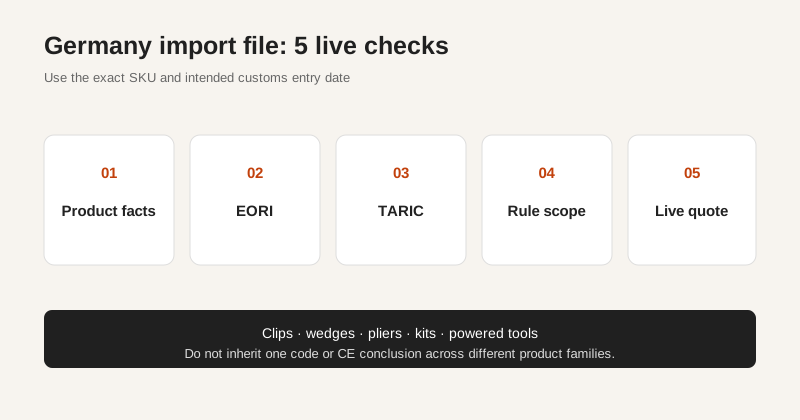
Bottom line: Germany uses the EU customs and product framework, but the correct outcome depends on the exact SKU. Keep classification, compliance, commercial and receiving evidence in one import file.
5 official checks for a Germany import
- EORI: the European Commission EORI guidance states that it is mandatory for EU customs operations by economic operators.
- Tariff: use the EU TARIC database, which is updated daily and does not contain national VAT rates.
- Product rules: identify whether the SKU is consumer or professional equipment and which safety rules apply.
- CE scope: the official EU CE guidance says marking is required only for product groups covered by harmonised rules that mandate it.
- Current logistics: quote the confirmed packing, ready date and German delivery point.
Classify clips, wedges, pliers and kits separately
A plastic break-off clip, reusable wedge, mixed-material plier, retail set and powered suction tool do not share identical facts. Give the adviser composition, function, manufacturing method, photos and packaging. Record the selected code, reasoning and TARIC result. Reopen the decision when the product or set presentation changes.
CE is a scope decision, not a quality badge
Do not add or request a CE mark merely because the item is used on a building site. Determine whether a specific EU harmonisation law covers the exact product. If no CE rule applies, the mark must not be used; applicable general product-safety, chemical, labeling and importer obligations still need review. TÜV or laboratory documents can support evidence, but they do not choose the legal regime.
Build landed cost from current documents
Separate goods value, origin charges, freight, insurance, customs value, duty, import VAT, destination fees and inland delivery. Use the entry-date tariff result and the importer's current VAT position. Store the quote date and exclusions. This prevents a changing freight or tax input from becoming a permanent claim on the page.
A 6-record German import file
- SKU description, composition, use and photos
- EORI and importer/declarant responsibilities
- Classification rationale and dated TARIC result
- Applicable product-safety and marking assessment
- Invoice, packing list and transport document
- Customs release, tax and warehouse receiving records
Route selection and warehouse receiving
Compare current sailings and total destination cost to the final postcode rather than assuming Hamburg is always the best route. At receipt, count cartons by SKU, inspect damage, verify joint sizes and pack counts, and reconcile discrepancies before inventory is distributed.
Start with our tile leveling clips, tile leveling wedges and tile leveling system wholesale supplier pages, then use the tile leveling landed-cost method.
Importer and supplier responsibilities
The supplier should provide truthful composition, function, model, packaging, origin and shipment data. The German importer remains responsible for placing a compliant product on the market and for a defensible customs entry. A broker can prepare the declaration, but the buyer should review the description, value, origin and code before submission.
Private-label orders add manufacturer obligations
An importer selling the product under its own name or trademark may take on manufacturer responsibilities under applicable EU rules. Freeze the branded model name, responsible-operator information, traceability, warnings and technical file before packaging is printed. Do not assume that a factory certificate covering an unbranded reference automatically covers a changed private-label set.
Use a change gate for repeat orders
Before every reorder, ask whether material, geometry, color, pack count, supplier entity, production site or kit contents changed. A commercial reorder is not automatically a regulatory repeat. Changes that affect classification, safety evidence or labeling should be reviewed before production release.
Frequently asked questions
Does a German commercial importer need an EORI?
EU guidance states that an EORI is mandatory for customs operations by economic operators in the EU customs territory. Confirm the declarant and importer records before dispatch.
What tariff code applies to tile leveling systems in Germany?
There is no safe single answer for every item. Classify plastic clips, wedges, mixed-material pliers, kits and powered tools from their composition, function and presentation, then verify current measures in TARIC.
Do plain plastic tile leveling clips need CE marking?
CE marking is required only where harmonised EU rules specifically mandate it. Determine the exact product scope first; products outside CE legislation still need to comply with applicable product-safety rules.
How long does shipping from China to Germany take?
Use a current quote tied to the cargo-ready date, origin, service, port, clearance and final warehouse. Historical port-to-port ranges are not delivery commitments.