
Article 23 defers import-VAT accounting; it does not delete the VAT record.
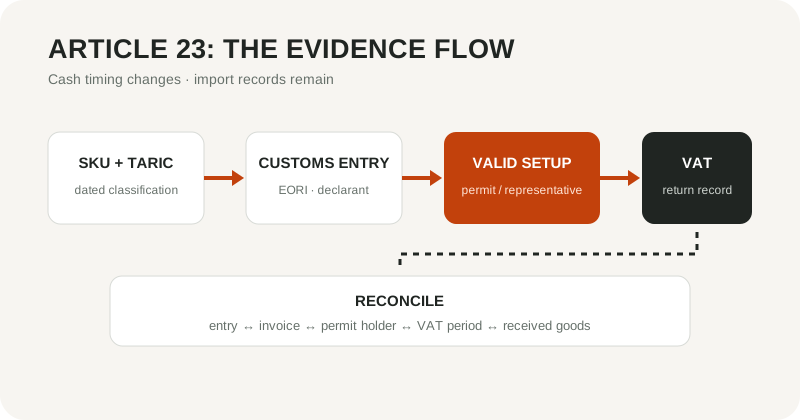
Bottom line: Article 23 can improve cash timing for an eligible setup, while classification, customs and VAT-return evidence remain required.
5 official checks
- Confirm EORI.
- Verify the exact SKU in TARIC.
- Review the official Article 23 guidance.
- Determine CE or general product-safety scope.
- Quote the actual cargo and warehouse.
Article 23 needs a valid structure
A Dutch-established business applies under the official conditions. A foreign business may use a fiscal representative. Confirm who owns the permit, who files the return and how import entries reconcile to it. Do not advertise deferred VAT as a universal zero-cost border.
Before shipment, record the permit holder, representative where relevant, customs declarant and VAT-return owner. Make sure the identifiers appear consistently in the entry instructions. After clearance, match the import record to the correct VAT period and retain the reconciliation with the invoice.
Classify and control each SKU
Separate plastic components, mixed-material tools, kits and powered equipment. Retain composition, function, photographs, packaging and code rationale. Review changes before repeat production.
The product sheet should also include net weight, country of origin, unit count and whether the goods arrive individually or as a set. Archive a dated TARIC result because its measures are updated and national VAT is outside TARIC. One family-level code is not evidence for every model.
Route and landed cost
Model goods, freight, insurance, customs value, duty, VAT record, destination charges, representation and inland delivery separately. Compare Rotterdam with alternatives using current door-to-warehouse cost.
Normalize every quote to the same cargo-ready date, carton totals and warehouse. List transshipment, free time and excluded destination services. Article 23 changes when import VAT is reported; it does not reduce freight, duty, port handling, representation or inland transport.
Private label and receiving
Freeze model identity, responsible-party details, traceability, pack count and warnings. At receipt, count by SKU and reconcile permit, invoice, packing list and physical goods before onward distribution.
Keep approved artwork and a photographed production sample. Open a defined number of cartons, check joint-size labels and pieces per bag, and isolate substitutions or damage. Tie the receiving record to the customs entry so the financial and physical files close together.
When the Netherlands is a distribution gateway
If goods move onward after Dutch entry, document who owns them, where the first release occurs and which records support the next movement. Do not infer the VAT or customs treatment from the destination alone. Ask the customs and tax advisers to map the actual transaction chain before the supplier prints shipping marks.
Keep the Dutch entry file distinct from the commercial delivery file. Record the consignee, warehouse, onward customer and transport document at each handoff. This makes it possible to trace a VAT return entry back to the imported cartons and avoids using Rotterdam's gateway role as a substitute for transaction-specific advice.
Six retained records
- SKU facts
- EORI and declarant
- TARIC result
- Article 23/representative record
- Shipment documents
- VAT and receiving reconciliation
Review our tile leveling clips, tile leveling wedges and tile leveling system wholesale supplier, then use the landed-cost method.
Frequently asked questions
What does a Dutch Article 23 permit do?
It moves import-VAT accounting from immediate customs payment to the VAT return. A permit is required; foreign businesses generally use an eligible fiscal representative.
Is Article 23 automatic?
No. The Dutch Tax Administration sets conditions and an application process. Confirm that the permit or representative arrangement is valid before import.
What code applies to tile leveling tools?
Classify every SKU from its own composition, function and presentation, then verify current measures in TARIC. Do not apply a plastic-clip code to pliers, kits or powered tools.
Is Rotterdam always the best route?
No. Compare current sailing, destination charges, clearance, fiscal representation and inland delivery to the final warehouse.