
Bottom line: Do not build a landed-cost model around one permanent duty rate. Freeze the product description first, have a broker verify the current HTS and any additional tariff line, and record the assumptions beside the quote date.
Import Tile Leveling Systems to USA in 5 Steps
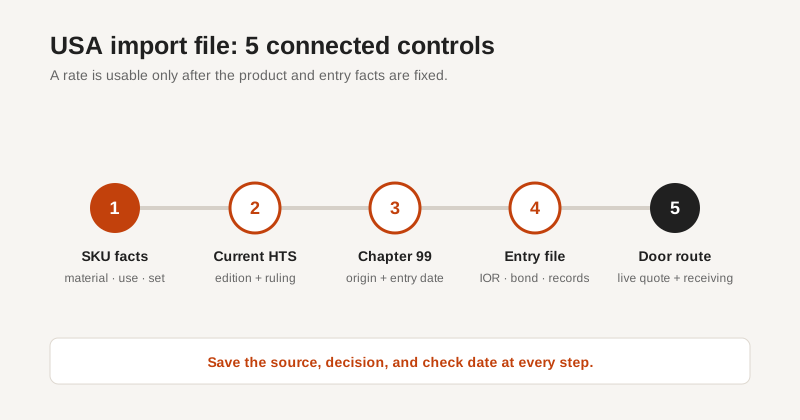
- Create a SKU evidence sheet. Record material, purpose, dimensions, photos, packaging, origin, and whether the item is imported alone or in a retail kit.
- Confirm the current HTS line. Search the current USITC Harmonized Tariff Schedule. Save the edition and access date used.
- Check additional measures. For China-origin goods, test the proposed HTS against Chapter 99 and CBP's current Section 301 guidance.
- Prepare the entry. Confirm the importer of record, broker authority, importer number, bond arrangement when required, invoice, packing list, transport record, and origin marking.
- Quote the live route. Compare current door offers using the same cargo dimensions, Incoterm, free-time assumptions, and warehouse address.
Why One HTS Code Cannot Cover Every Tile Tool
A polypropylene break-off clip, a reusable steel-and-plastic leveler, and adjustment pliers do not share identical material or function. A combo kit can add another question: should the set be classified as a unit, or should components be treated separately? Product photos and a precise use description therefore matter as much as the commercial name.
CBP's CROSS and eRulings database helps importers find prior decisions. A close ruling can support the analysis, but it does not automatically bind a different SKU. If classification remains material to the business case, request a binding ruling before repeated shipments.
3 Numbers That Must Carry a Date
The duty rate, freight quote, and lead time all need an “as of” date. Tariff revisions and trade measures can change the calculation. Ocean schedules, congestion, equipment, and inland capacity change the route. Production time changes with the selected tile leveling clips, packaging, and order size.
Ask each provider to return the same fields: cargo-ready date, port pair, estimated departure and arrival, transshipment count, destination charges, drayage assumptions, free days, and quote expiry. Treat an estimate as planning data rather than a delivery promise.
Importer of Record, Bond, and Recordkeeping
The importer of record remains responsible for reasonable care even when a licensed broker files the entry. CBP generally uses formal entry for commercial shipments above the applicable threshold and may require a bond; special product rules can change that treatment. Confirm the actual entry type with the broker instead of applying a threshold in isolation.
Keep the classification rationale, ruling references, product specification, purchase order, invoice, packing list, bill of lading, origin evidence, entry summary, and payment records together. That file makes later reviews and repeat orders faster.
Receiving Plan for LCL and Container Orders
LCL can reduce inventory exposure for a first order, but destination handling and warehouse appointment charges can outweigh a cheap ocean line. A full container can simplify handling at scale, but only when the warehouse can unload within the allowed time. Compare total door cost and operational fit.
Before booking, match carton and pallet data to the warehouse: pallet material, stack height, gross weight, forklift access, appointment window, and labeling. Nonmanufactured wood packaging entering the United States must meet the applicable wood-packaging rules.
Frequently Asked Questions
What is the US HTS code for tile leveling clips?
There is no safe universal code for every tile leveling system. Classification depends on material, function, construction, and whether components enter separately or as a set. Compare the exact SKU with the current USITC HTS and relevant CBP rulings; seek a binding ruling when uncertainty materially affects repeat orders.
How do I calculate duty on tile leveling systems from China?
Confirm the ordinary HTS classification and customs value. Then check current Chapter 99 notes and Section 301 applicability for that HTS and origin on the entry date. Save the tariff edition, additional line, broker confirmation, and calculation date.
Do US importers need a customs broker and bond?
A broker is not mandatory for every importer, but many commercial importers use one because the importer of record remains responsible. Formal entries generally require a bond. Confirm the entry type and bond arrangement for the shipment facts.
Which US port should a tile tool importer use?
Choose the route with the best current door-to-warehouse result. Compare cargo-ready date, sailing and transshipment plan, destination charges, inland move, free time, and warehouse capacity.