
Private Label Tile Leveling Systems: OEM Workflow
Published thresholds are 3,000 bags for custom packaging and 5,000 bags per custom color; custom molds are scoped separately.
Private label starts with the product and channel brief, not a logo dropped onto a generic bag. A China tile leveling system manufacturer needs the target SKU, pack count, retail language, barcode, color and inspection criteria before it can price wholesale OEM work. The workflow below separates published production windows from artwork revisions and international shipping.
Bottom line: approve the product specification and packaging file as two controlled references, then connect both to the PO and pre-shipment inspection.
3 Private Label Tile Leveling Systems OEM Levels
| Level | Published threshold | Controlled approval |
|---|---|---|
| 1. Custom packaging | 3,000 bags; 15–25 production days | Dieline, artwork revision, count, barcode and carton marks |
| 2. Custom color | 5,000 bags per color; 15–25 production days | Pantone reference and approved physical sample |
| 3. Custom mold | 15–25 development days; $2,000–8,000 | Drawing, material, critical dimensions, T1 sample and ownership terms |
⚖️ Guide prices are FOB Ningbo at MOQ and subject to raw material cost fluctuations — contact us for current pricing.
These are program thresholds, not a promise that every assortment can mix freely. Product MOQs apply by SKU: for example, standard clips and wedges have a 500-bag MOQ per SKU. Packaging quantity, product assortment and carton plan must reconcile before the quote is approved.
The 6-Step OEM Workflow
- Write the brief: list SKU, size, color, pieces per pack, sales channel, languages, barcode, destination and order quantity.
- Confirm the commercial scope: reconcile product MOQ, packaging MOQ, tooling, Incoterm, documents and revision responsibility.
- Approve product and artwork references: identify the physical product sample, Pantone reference, dieline and final artwork revision. The written sample arrangement confirms the preparation window after the model and usable inputs are reviewed.
- Issue the PO: place model, quantity, approved samples, packaging revision, inspection method, payment trigger and remedy in writing.
- Produce and inspect: inspect product characteristics and packaging against separate defect lists; verify barcode, count, color reference and shipping marks.
- Release and load: approve the inspection result, balance trigger, packing list, carton marks and loading evidence before shipment.
Use the 10-clause purchase order checklist to connect these steps. Lead time starts from the agreed trigger in the quote or PO; missing artwork, rejected samples and buyer revisions can move the schedule.
Production Case: XPro Tools Horseshoe Shims
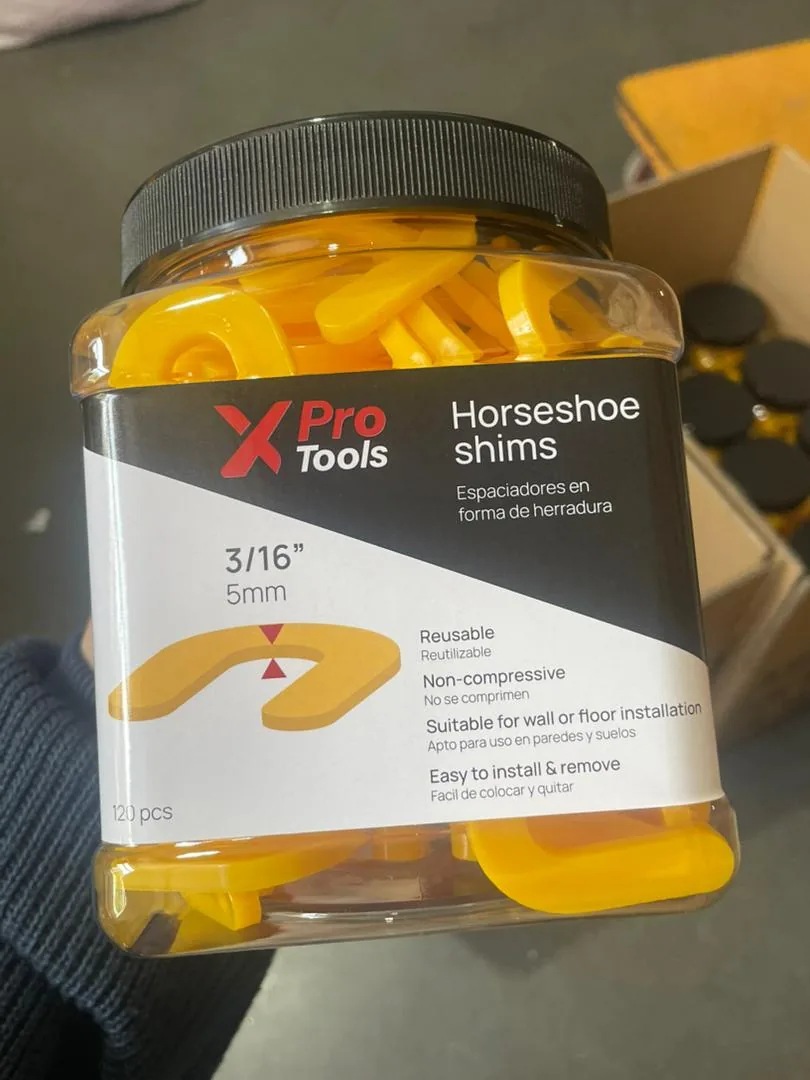
This case shows a channel-ready package built around a defined size and count. The jar label makes the metric and inch size visible, while the matching master cartons carry the branded product through packing. The relevant approval points are label revision, 120-piece count, 5mm size, barcode or shipping marks and carton assortment.
Production Case: RapidTiles 400-Piece Pails
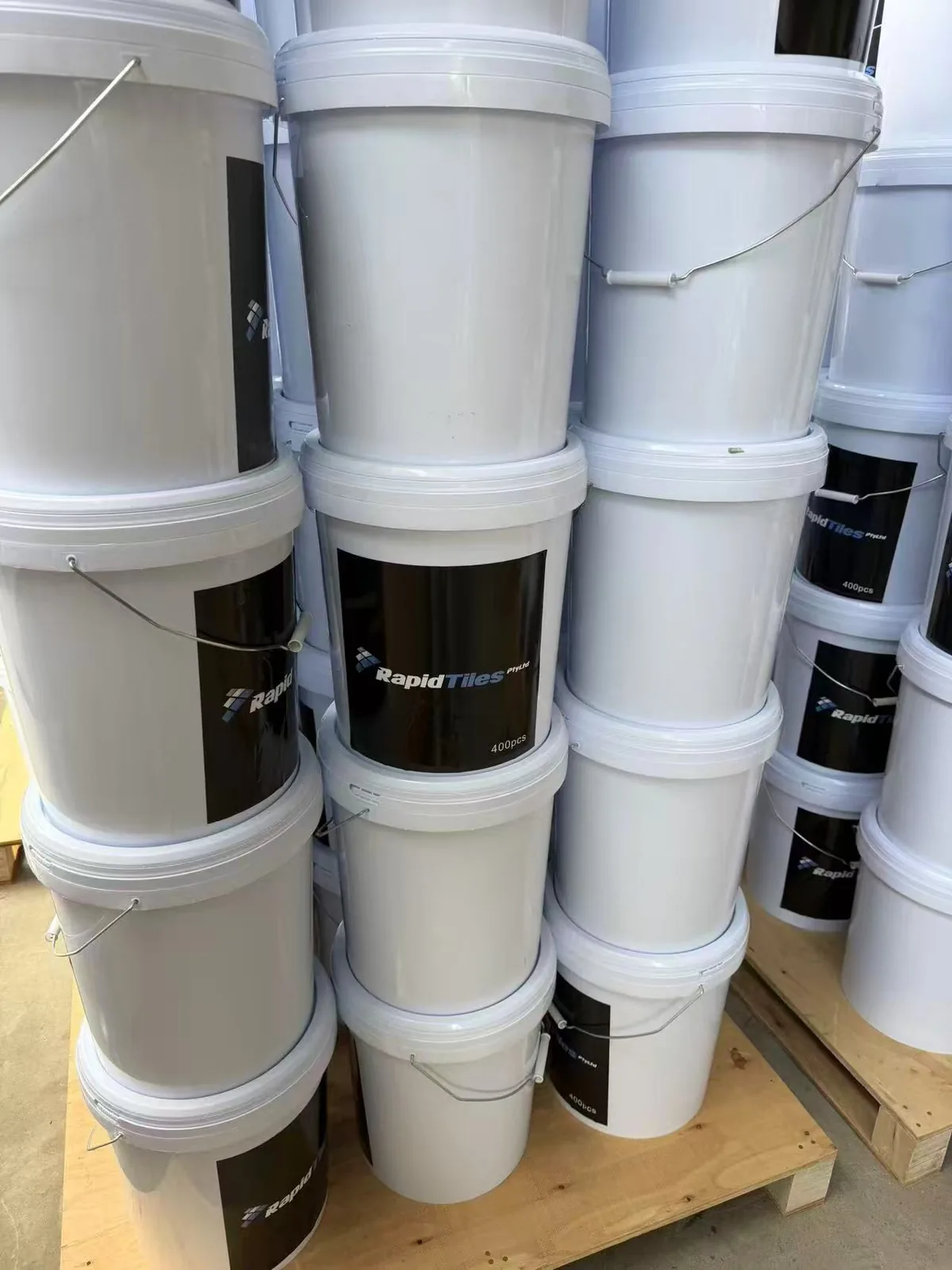
RapidTiles used a branded pail rather than a bag or jar. Production images show finished 400-piece pails and timber-crate export loading. This format adds controls for pail artwork, lid, count, shipping protection and crate marks. It also shows why packaging approval and transport packaging need separate PO lines.
Private Label Inspection Needs Two Defect Lists
The product list covers model, dimensions, material declaration, fit, count and agreed functional test. The packaging list covers wrong artwork revision, color mismatch, unreadable barcode, incorrect language, wrong pack count, weak seal and wrong carton mark. “AQL 2.5” alone does not define any of those defects. Use the pre-shipment inspection guide to write the lot and sampling decision.
Frequently Asked Questions
What is the MOQ for private label tile leveling packaging?
ZEBRA's published custom-packaging MOQ is 3,000 bags. The product MOQ still applies by SKU, so the final order plan must satisfy both the packaging run and product quantities.
What is the MOQ for a custom product color?
The published custom-color MOQ is 5,000 bags per color. Send the Pantone reference and selected product before quotation because resin, geometry and color can affect sample approval.
How long does a private label sample take?
The written sample arrangement confirms the preparation window after the model, brief and usable artwork are reviewed. Shipping time and revision rounds are separate and should be written into the project schedule.
Does AQL 2.5 fully define private label inspection?
No. The PO must also define the lot, sampling standard and edition, inspection level, defect classes, product tests, artwork revision and acceptance or rejection rule.
Turn Your Brand Brief Into an OEM Scope
Send the SKU, pack count, artwork language, target color and destination for a feasibility review.
Review the OEM Program →