
Tile Leveling Clips Pre-Shipment Inspection: 5 Gates
Verify the production lot, packed quantity, model dimensions, agreed break behavior and final acceptance decision. Photos alone do not replace a sampling plan or pass/fail criteria.
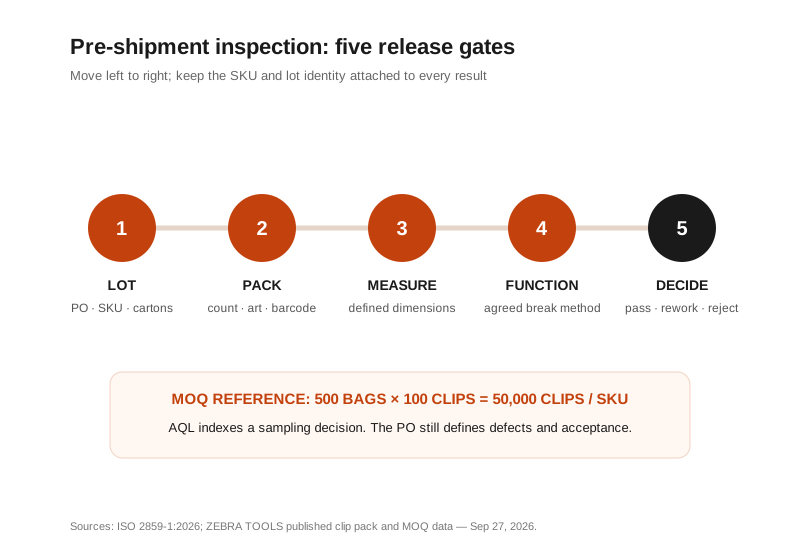
A carton photo can prove that cartons exist. It cannot prove that the correct models, quantities and performance are inside them. This tile leveling clips inspection guide is for importers and distributors buying wholesale from a China factory. It converts the purchase order into five release gates that an inspector can document before the balance is released.
The practical answer: inspect identity first and function last. A functional test from an unidentified carton cannot establish which SKU or production lot passed.
Gate 1 — Identify the Lot Before Opening Cartons
Record the PO number, factory lot or production date, SKU, joint width, color, carton numbers and total quantity presented for inspection. Draw samples across the lot according to the agreed plan instead of accepting a prepared tray from the sample room. If more than one model is packed, each model must remain traceable through the report.
The scale matters. Published tile leveling clips contain 100 pieces per bag and have a 500-bag MOQ per SKU. One MOQ line is therefore 50,000 clips. The inspector should record the lot actually presented, not assume it equals the ordered quantity.
Gate 2 — Check Packaging, Counts and Identity
- Confirm the model and joint width printed on each selected bag.
- Count pieces using the PO's defined method and record every shortage or overage.
- Compare artwork filename or revision, barcode and country-of-origin text with the approved file.
- Check carton quantity, carton marks and mixed-SKU separation.
- Photograph the sealed carton, opened carton, selected bags and any nonconformity with its lot identifier.
Packaging errors can make conforming clips commercially unusable. Treat a wrong barcode, wrong language panel or mixed model as a defined defect class if it matters to the destination channel.
Gate 3 — Measure the Characteristics Written in the PO
Use calibrated tools and the measurement points defined in the specification. Record the individual results rather than only writing “dimension OK.” The relevant measurements depend on the model: joint-forming width, base geometry, usable tile-thickness opening and any mating dimension needed for the wedge. The tile leveling system specification guide shows how these product characteristics relate to the application; the rectified tile installation guide explains why joint width and actual warpage must remain separate checks.
Do not invent a universal ±0.1mm tolerance for every clip dimension. The accepted range and measurement method belong in the PO for that SKU.
Gate 4 — Test Break Behavior With One Written Method
A break-force number is meaningless without the fixture, pull direction, speed, conditioning, sample preparation and pass/fail rule. Define whether the clip must separate at the intended break point, whether remnants above the substrate are allowed, and how partial or sideways fractures are classified.
ASTM C648 covers the breaking strength of ceramic tile; it does not establish a break-force requirement for plastic leveling clips. The clip break-force testing guide explains which test details buyers must agree instead of borrowing a tile standard.
Gate 5 — Issue a Decision, Not a Photo Folder
The final report should list the lot, SKU quantities, plan used, samples inspected, results by defect class, measurement records, photos tied to carton or lot identifiers and one decision: pass, rework then reinspect, or reject. State who may authorize shipment after the decision.
If rework is allowed, define its scope and repeat the affected checks. Replacing a few photographed bags does not demonstrate that a labeling or count problem across the lot has been corrected.
What AQL 2.5 Does — and Does Not — Mean
ISO 2859-1:2026 is a system of sampling schemes indexed by acceptance quality limit for continuing lot-by-lot inspection. AQL helps select a sampling decision when the required inputs are defined. It is not permission for 2.5% of every delivered lot to be defective, and it does not define critical, major or minor defects for tile leveling clips.
The purchase order checklist shows where to record the standard edition, lot, inspection level, defect classes, decision rule and remedies. Buyers using another sampling plan should name that plan instead.
Frequently Asked Questions
What should be checked during tile leveling clips inspection?
Use five gates: identify the production lot and SKUs, verify packaging and counts, measure the characteristics written in the PO, test break behavior with the agreed method, and issue a report with a pass, rework or reject decision.
Does AQL 2.5 mean that 2.5% defective clips are accepted?
No. AQL indexes a sampling scheme for a continuing series of lots. The actual sample and acceptance decision depend on the named standard, lot size, inspection level, sampling plan and defect classification agreed by the parties.
How large is a 500-bag tile leveling clip order?
At the published pack of 100 clips per bag, 500 bags contain 50,000 clips. Inspection records should still use the quantity actually presented and keep every model traceable.
Are pre-shipment photos enough to approve a clip order?
No. Photos support traceability, but they do not replace the sampling plan, measurements, functional test results, defect counts and written release decision required by the purchase order.
Define the Inspection Before Production
Share the SKUs, packaging and acceptance conditions with our team so the production and inspection records use the same reference.
Discuss Your Inspection Plan →