
Amazon FBA Packaging Dimensions for Tile Tools
Tie them to one approved packaging revision, then use the current Amazon calculator for the target store.
ZEBRA supplies private-label tile tools from China to e-commerce sellers. This Amazon FBA packaging dimensions guide is for buyers converting an approved physical pack into a controlled marketplace record. It covers the measurements a supplier can provide, the checks the seller must complete and the point where a packaging estimate stops being a fee guarantee.
Bottom line: measure the finished sellable unit, identify the exact packaging revision and calculate with Amazon's current tools; never assign a fee tier from the bare product or an earlier sample.
Amazon FBA Packaging Dimensions Start With 4 Inputs
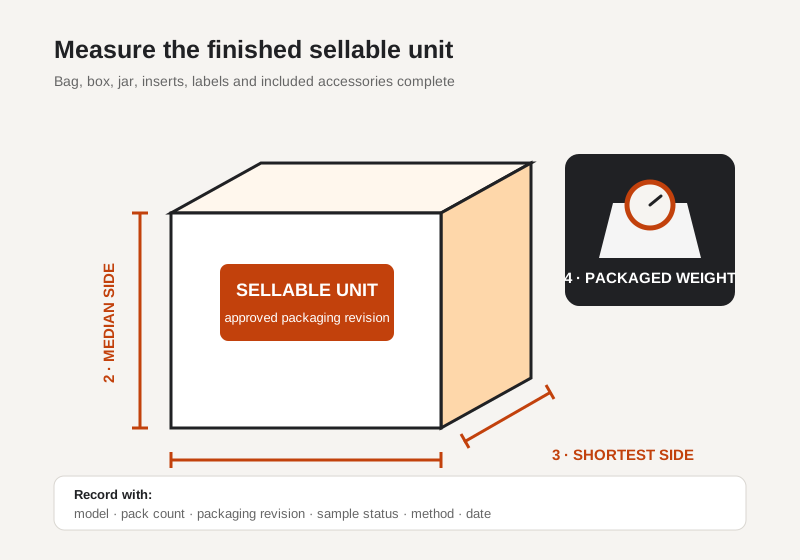
- Longest side: the greatest outside dimension of the finished unit.
- Median side: the remaining dimension that is neither longest nor shortest.
- Shortest side: often the dimension affected by bag thickness, inserts or protruding components.
- Packaged unit weight: product plus retail packaging, labels, instructions and included accessories.
Amazon explains that product size tiers use unit weight, packaged dimensions, volume and dimensional weight and that these attributes feed several FBA fees. The seller should check the current definition for the target store because rules and fee tables can change. Source: Amazon Seller Central Product Size Tiers, accessed October 9, 2026.
Measure the Sellable Unit, Not the Factory Master Carton
A master carton may hold dozens of bags or boxes. Its dimensions belong in the purchase order, packing list and freight calculation; they are not the dimensions of one customer-facing Amazon unit. For a clip refill, measure the finished bag or jar. For a kit, measure the closed retail box with every clip, wedge, plier, insert and protective component inside.
Do not infer finished dimensions from artwork, dielines or loose components. A flexible bag can expand after filling, a box insert can change the shortest side, and a bundled tool can create a protrusion. Measure a representative approved pack on a flat surface and retain photographs of the measurement points.
Use a 7-Field OEM Measurement Record
The four numbers are useful only when the physical item behind them is identifiable. Each measurement record should carry seven control fields:
- Factory model and seller SKU or intended child record.
- Pack count and included components.
- Packaging revision or approved artwork reference.
- Longest, median and shortest sides with units.
- Packaged unit weight with units.
- Sample status: prototype, approved sample or production unit.
- Measurement date, method and responsible person.
Keep this record with the OEM packaging sample checklist. The packaging approval confirms what should be produced; the measurement record confirms what was used for marketplace planning.
Download the packaging measurement CSV template →
How Packaging Changes Can Change the Fee Inputs
A change does not need to alter the product itself to affect the finished unit. A thicker carton, revised insert, added manual, protective sleeve or different pack count can change one or more measurements. Amazon's 2026 US fee update specifically points sellers toward packaging updates as one way to access lower-cost options, but it does not promise that any one redesign will reduce a specific fee. Source: Amazon 2026 US Referral and FBA Fee Changes, accessed October 9, 2026.
Before approving a change, compare the current and proposed pack records. Estimate both versions in the current marketplace calculator. Then review product protection, barcode placement, customer presentation and factory packing efficiency alongside the fee estimate; a smaller pack that damages tools or obscures required information is not an improvement.
Factory Measurements Do Not Guarantee an Amazon Tier
Supplier data supports quoting, design review and pre-launch planning. Amazon can apply its own measurements after inventory is received. The marketplace's current rules, recorded attributes and program status govern the account result. Treat any difference as a data issue to investigate with photographs and the approved pack record, rather than describing the product as “FBA-ready” or “no-prep” without confirmation.
The same boundary applies to the Amazon tile leveling clip variation guide: a controlled physical record does not grant listing eligibility. It gives the seller a traceable input for the relevant marketplace workflow.
Send These Inputs in the Packaging RFQ
Tell the supplier the target store, intended pack count, included models, packaging type, barcode path, label languages and any dimensional target. Ask for a measured approved sample before mass production. For a multi-component product, start from the tile leveling system kit specification, then freeze the finished pack rather than assuming the catalog dimensions apply to a custom version.
Use the tile tool OEM program to align artwork, pack count, sample approval and production revision. The seller remains responsible for checking the target marketplace's current catalog, packaging and fee requirements.
Frequently Asked Questions
Which dimensions should an Amazon seller request from a tile tool factory?
Request the longest, median and shortest sides of the finished sellable unit, plus finished unit weight. Record the packaging revision, measurement date and sample status so the numbers can be traced to the physical pack used for the listing and fee estimate.
Can I estimate FBA fees from bare clips, wedges or pliers?
No. Amazon's product size tiers use the packaged item. Measure the retail bag, box, jar or kit after all inserts, labels and protective materials are included, then use the current calculator for the target store.
Does fitting within one published size boundary guarantee an FBA fee tier?
No. Amazon uses several inputs and may measure inventory itself. A supplier measurement is a planning record, not a marketplace decision. Check the live size-tier rules and Revenue Calculator, then review Amazon's recorded dimensions after receipt.
When should packaging dimensions be measured again?
Measure again after any change that can alter the finished unit: pack count, carton or bag structure, insert, tool combination, protective material or packaging revision. Keep the previous and new records rather than overwriting the audit trail.
Build the Measurement Record Before Printing
Send the model, pack count, target store and packaging brief for an approved-sample review.
Review OEM packaging inputs →