
Packaging Sample Checklist: 7 OEM Approval Gates
Check structure, material, artwork, color, barcode, packout and transport evidence against one controlled revision before bulk printing.
A correct logo does not make an approved package. For a China wholesale order, this packaging sample checklist connects the physical pack, artwork file, product count, barcode and shipping evidence before a private-label print run begins.
Bottom line: assign the packaging sample an ID and revision, record all seven decisions, and prohibit production from an unapproved email attachment.
The 7-Gate Packaging Sample Checklist
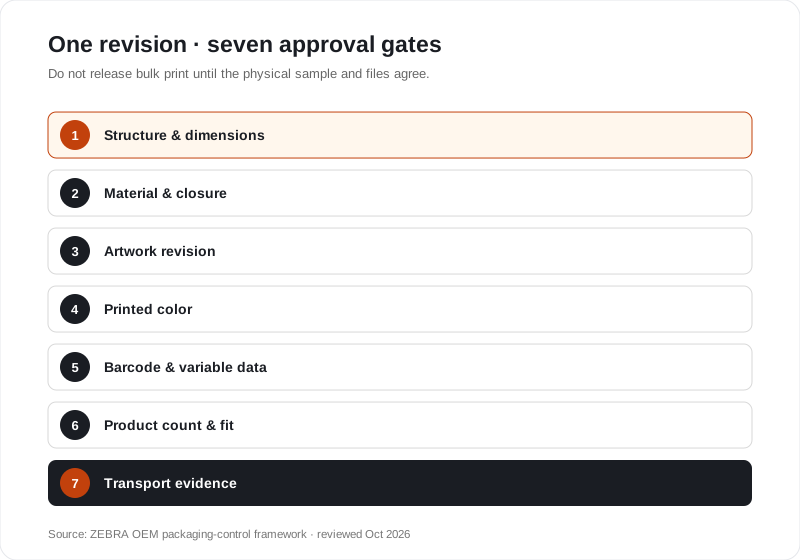
- Structure and dimensions: measure finished size, gusset, seal area, hanging feature and carton fit.
- Material and closure: record film/paper construction, thickness method, seal, zipper, pail lid or other closure.
- Artwork revision: verify brand, product name, model, language, legal text, units and file revision.
- Printed color: compare under the approved reference and conditions; document any accepted deviation.
- Barcode and variable data: verify symbology, encoded data, quiet zones, human-readable text and print quality.
- Count and fit: pack the real product, verify quantity, closure and reasonable empty space or stress.
- Transport evidence: choose a test from the actual package, weight and distribution route, then define damage before testing.
Barcode Approval Needs Data and Print Quality
First decode the symbol and compare the data with the approved SKU record. Then verify print quality under the method required by the buyer or retailer. ISO/IEC 15416:2025 specifies measurement and overall assessment methodology for linear barcode symbols. It does not choose the buyer's symbology, encoded content or minimum grade.
Record the verifier, aperture, wavelength or illumination condition, grade and scan direction when those fields apply. A successful phone scan is useful during artwork review, but it cannot establish an unstated retailer requirement.
Do Not Ask One Sample to Answer Three Questions
A structural sample can answer whether the bag, box, jar or pail fits the product and closes correctly before final print exists. A printed color sample can answer artwork placement, text, image and color questions on the intended substrate. A production-equivalent packed sample can answer whether the real product count, closure, label and shipping configuration work together. Name which stage is being approved instead of calling each one “final.”
When a stage uses substitute material, digital print, hand assembly or a different closure, record the difference and the remaining approval gate. Approval of a white structural mock-up does not approve printed color. Approval of a flat press sheet does not prove the filled package will seal, hang, stack or survive the selected transport test.
ISTA 1A Is a Screening Tool, Not a Universal Shipping Certificate
ISTA describes Procedure 1A as integrity testing for individual packaged products weighing 150 lb (68 kg) or less and useful early in design. Its 1-Series challenges package strength and robustness but is not designed to simulate every distribution environment. Parcel, LTL, pallet and retailer systems can require different procedures.
Before any test, define product damage, allowable package degradation, the actual packed configuration and the post-test inspection method. Keep the report with the exact package revision tested.
Approve the Pack Before 3,000 Bags
ZEBRA's published custom-packaging MOQ is 3,000 bags, with 15–25 production days after usable artwork and approval inputs are confirmed. Product MOQ still applies by SKU. Sampling, buyer review, revisions and shipping sit outside that production window.
Use the approved sample manufacturing process for the pack ID and sign-off. If artwork or structure changes after release, use the OEM order change process to count affected material and reset the active revision.
Keep Four Files With the Approved Package
Retain the approved physical sample or production-equivalent sample, locked artwork PDF, editable source-file revision and signed approval/checklist. Add barcode and transport reports when required. The PO should name the active revision and explain who may approve later changes.
Send the real product, intended channel, languages and barcode requirements to a tile leveling system OEM manufacturer before artwork production begins.
Frequently Asked Questions
What should I check on an OEM packaging sample?
Check seven gates: structure and dimensions, material and closure, artwork revision, printed color, barcode and variable data, product count and fit, and transport or handling evidence. Record the result against one sample ID and revision.
Does scanning a barcode with a phone prove print quality?
No. A phone scan is a useful functional screen but does not replace a specified barcode verification method. ISO/IEC 15416:2025 defines measurement and grading methodology for linear barcode print quality; the buyer must still state the symbology, data, grade requirement and verification conditions.
Does ISTA 1A certify packaging for every shipping route?
No. ISTA describes 1A as an integrity screening procedure for individual packaged products weighing 68 kg or less, not a simulation of every distribution environment. Select the procedure from the actual package and distribution system, and define product damage and acceptable package condition before testing.
What is ZEBRA's MOQ for private-label packaging?
ZEBRA's published custom-packaging MOQ is 3,000 bags. The written quotation confirms production timing after usable artwork, packaging structure and approval inputs are fixed; sampling, revisions, shipping and product MOQ are separate.
Approve the Package Before Bulk Printing
Send the SKU, pack count, artwork, channel and destination requirements for a packaging review.
Review the packaging sample →