
Approved Sample Manufacturing: Golden Sample Process
Record its sample ID, SKU and revision, approval date, authorized approvals, and status or deviations; then link it to measurable specifications and the inspection plan.
Two acceptable-looking samples can represent different resin, color, dimensions or artwork revisions. In approved sample manufacturing, a China wholesale buyer and factory need one controlled reference that can be identified months later. Calling an unlabelled item “the golden sample” does not create that control.
Bottom line: approve the physical sample and its written specification together, assign one revision, and make every production or inspection decision against that combined record.
What an Approved Sample Does—and Does Not Do
The sample shows characteristics that are difficult to express with text alone: visual finish, tactile feel, assembled fit and an agreed appearance. The written specification carries characteristics that a physical object cannot state reliably: material declaration, nominal dimensions, tolerances, pack count, test method and artwork file revision.
A useful definition from manufacturing quality specialist Sofeast describes a golden sample as the final approved physical reference used by the buyer, supplier and inspection team, alongside the specification, bill of materials, drawings, tolerances and QC checklist (Sofeast, retrieved October 1, 2026). The word alongside matters: a sample cannot tell an inspector which hidden material or unperformed test is required.
5 Fields Every Approved Sample Label Needs
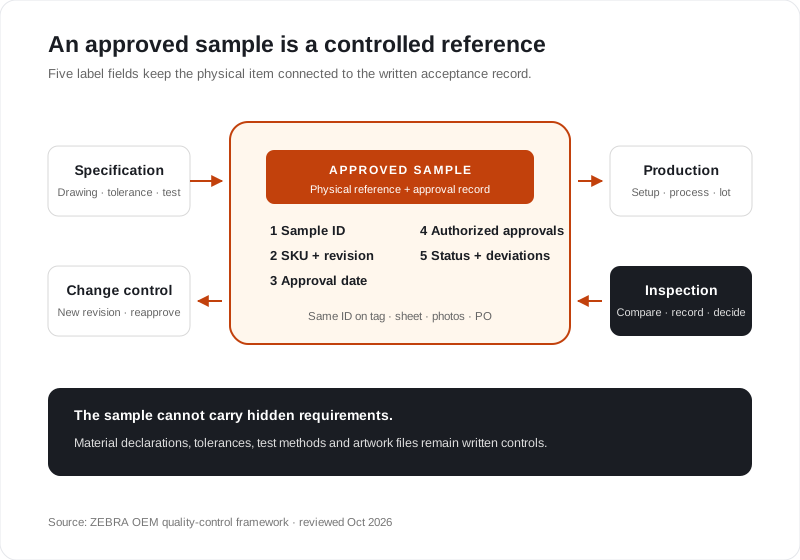
- Sample ID. Use a unique identifier that appears on the tag, approval sheet, photos and PO reference.
- Product and revision. Record the SKU, drawing revision and packaging or artwork revision. One label should not silently approve several versions.
- Approval date. The date separates the active reference from an older trial. If the reference has a review or expiry condition, record it too.
- Authorized approvals. Name the buyer and supplier representatives who approved it. A courier receipt or chat reaction is not a clear acceptance record.
- Status and deviations. Mark the sample approved, conditionally approved or rejected. List every accepted deviation instead of relying on memory.
Build the Reference in 6 Steps
State the SKU, material, dimensions, color reference, branding, pack count and intended test.
Record any hand work, substitute material or pilot process that differs from mass production.
Do not approve appearance while measurable dimensions, fit, count or agreed function remain unchecked.
Accept, reject or conditionally approve each difference and name the correction required for production.
Apply matching labels and tamper-evident packaging where practical; photograph each labelled copy.
State the sample ID, written specification, inspection use and change-approval rule.
ZEBRA confirms the sample preparation window in writing after the model, brief and usable inputs are reviewed. Courier transit, laboratory testing, buyer review and additional revision rounds are separate. The schedule should name the event that starts each clock.
Record the sample ID, model, revision, written requirements, measured results, deviations, controlled copies and release decision in one XLSX file.
Approved Sample Control Record (XLSX) ↓How Many Golden Sample Copies Should You Keep?
There is no universal copy count for every order. Keep one controlled copy at each place where a physical acceptance decision will be made. A common three-copy plan covers buyer, factory and independent inspector, but two copies may be enough when the buyer does not need a third-party physical comparison. The control matters more than the count: every copy must share the same ID and revision.
| Holder | Primary use | Control check |
|---|---|---|
| Factory | Setup and in-process comparison | Stored where production and QC can access it |
| Buyer | Approval record and dispute comparison | Identity matches factory copy and PO |
| Inspector | Pre-shipment physical comparison | Same revision, received before inspection |
Golden Sample vs Limit Sample
A golden or approved sample represents the accepted target. A limit sample represents an agreed boundary condition, such as the maximum acceptable visual mark or color variation. Do not turn one attractive sample into an unstated zero-defect promise, and do not use a limit sample without explaining which characteristic it limits. Both need IDs, revisions, approval records and storage controls.
For tile leveling clips, for example, a physical reference can show color and general finish. The PO still needs the exact model, joint width, tile-thickness range, pack count and agreed fit or break test. Use the tile leveling clips inspection guide to turn those requirements into an inspection decision.
What Happens When Production Does Not Match?
First isolate the affected lot and identify the exact mismatch. Compare production with the sample, drawing, specification, artwork revision and inspection method. Then record the evidence and follow the written acceptance, rework, replacement or concession process. Do not solve a discrepancy by relabelling the production item as the new approved sample after the fact.
For international sales governed by the CISG, Articles 38 and 39 address examination and notice of non-conformity; the precise timing depends on the circumstances and contract (UNCITRAL CISG text, Articles 38–39, retrieved October 1, 2026). The practical procurement response is to write inspection timing and notice contacts into the order instead of assuming the sample alone defines the process.
Connect Sample Approval to the OEM Order
The mold ownership China contract should connect the trial sample to the mold ID and drawing revision. The private label tile leveling OEM workflow then connects product approval, artwork approval, PO and pre-shipment inspection.
Send the complete brief to the tile leveling system OEM manufacturer. For standard models, pack formats and current minimums, start with the tile leveling system wholesale supplier reference.
Frequently Asked Questions
What is an approved sample in manufacturing?
An approved sample is an identified physical product accepted by authorized buyer and supplier representatives as one production reference. It works with the drawing, specification, artwork and inspection checklist; it does not replace measurable written requirements.
Who should keep the golden sample?
Keep controlled copies wherever a physical comparison is required. A common plan uses one buyer copy and one factory copy, plus an inspector copy when an independent inspector needs the same reference. Every copy should carry the same sample ID, revision and approval record.
What should be written on an approved sample label?
Use five control fields: sample ID, product SKU and revision, approval date, authorized approvals, and status or documented deviations. Add handling or expiry instructions when color, materials or storage can change the reference.
How long does a ZEBRA OEM sample take?
ZEBRA confirms the sample preparation window in writing after the model, brief and usable inputs are reviewed. Shipping time, testing, buyer review and revision rounds are separate and should be scheduled explicitly.
Create a Sample That Production Can Follow
Send the SKU, target color, branding file, pack count and measurable acceptance points.
Plan the approved-sample process →