
OEM Order Change Lead Time: 3 Control Windows
Before material commitment, after molding, and after packing each affect different inventory, approvals and shipping records. No change is active until the revised scope and schedule are acknowledged.
An artwork file changes after bags are ordered, or a buyer requests a different clip color after molding starts. For a China wholesale order, OEM order change lead time depends on what has already been purchased, produced, approved, packed or booked—not simply the date of the buyer's message.
Bottom line: freeze the current approved revision, issue one numbered change request, and restart production only after the affected quantity, disposition, approval, cost and schedule are acknowledged in writing.
3 Windows That Control OEM Order Change Lead Time
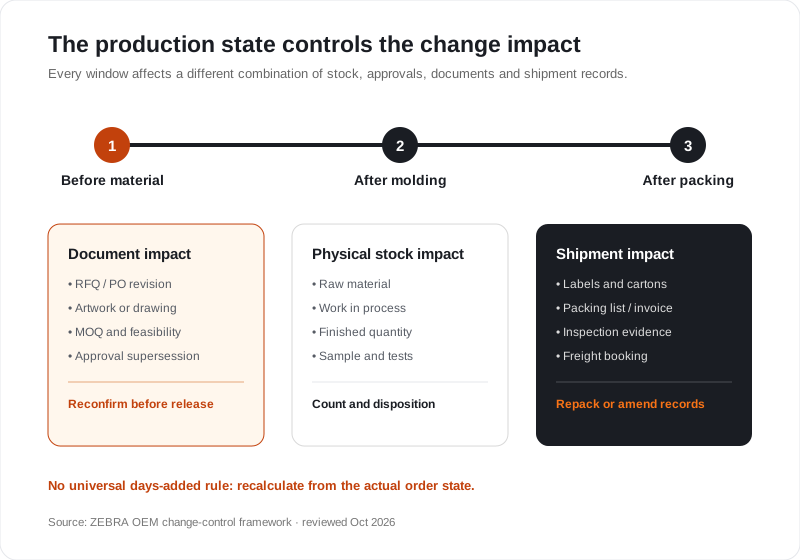
| Window | Evidence to check | Possible action |
|---|---|---|
| 1. Before material | PO release, artwork status, purchase commitments | Revise documents and reconfirm feasibility |
| 2. After molding | Completed and work-in-process quantity, resin/color/tooling state | Segregate, rework, replace or accept by written concession |
| 3. After packing | Packed lots, labels, cartons, documents and booking | Repack, relabel, amend documents or move shipment |
Window 1: Change Before Material Commitment
This is usually the least disruptive window because the factory can review the proposed revision before buying custom packaging, preparing a custom color or starting a mold operation. It still requires control: compare the current and proposed files, check MOQ and feasibility, replace the PO references and confirm which approval becomes obsolete.
A message saying “use the new logo” should not overwrite the released file in place. Preserve the earlier revision, assign the new file a revision ID and obtain supplier acknowledgement before it enters production.
Window 2: Change After Molding Starts
Once material is prepared or parts are molded, a color, resin, geometry or tool change can affect raw material, work in process and completed goods. Count each state separately. The buyer needs a disposition for every affected quantity: use under concession, rework, recycle where permitted, hold, replace or scrap under written authorization.
A product change also reopens the approval basis. Update the drawing and inspection checklist, then decide whether a new molded sample, fit check, color approval or first-lot inspection is required. The approved sample manufacturing process explains how to retire the old reference without creating two “final” samples.
Window 3: Change After Packing or Booking
After packing, a change may reach beyond the product. Review inner pack, label, barcode, carton mark, packing list, invoice, inspection report, pallet record and freight booking. A product that is physically correct can still be nonconforming when the approved artwork, count or destination label is wrong.
Record which packed lots are opened or relabelled and repeat any count, seal or barcode check affected by that work. If shipment timing changes, obtain the forwarder's current booking and cut-off information rather than applying a fixed delay.
Published OEM Windows Are Scope References
ZEBRA publishes 10–15 production days for custom packaging, 10–15 production days for custom color, and 15–25 development days for a custom mold after usable inputs are confirmed. These values describe the relevant OEM scope; they are not automatic penalties added to every change.
The revised schedule depends on the exact production state, available material, supplier capacity, approval work and shipping commitments. A packaging text correction before printing and a new mold geometry after trial cannot share one standard answer.
The 10-Field OEM Change Record
- Change request ID and request date.
- PO, SKU and current approved revision.
- Proposed revision and exact changed fields.
- Reason and buyer-requested effective point.
- Affected quantity by raw material, work in process, finished and packed state.
- Disposition of obsolete material, parts, labels and samples.
- New sample, test, inspection or document requirements.
- Revised price or one-time charge supported by the affected work.
- Revised production, approval and shipment dates.
- Buyer and supplier approvals plus the release date.
Attach that record to the tile leveling system purchase order. For a tooling revision, also update the mold ID, drawing and release controls described in the mold ownership China contract.
Send One Complete Change Request
Combine the revised file, marked comparison, affected SKU and quantity, requested effective lot and desired shipment date. Ask a tile leveling system OEM manufacturer to return feasibility, disposition, reapproval needs and the revised schedule in one response. That creates a decision record instead of a chain of conflicting chat messages.
Frequently Asked Questions
How late can I change an OEM order?
A change remains possible only after the supplier checks the current production state, affected materials and documents, work already completed, reapproval needs and shipping commitments. Submit the request in writing and do not treat it as approved until both parties acknowledge the revised scope, cost and schedule.
Does every OEM order change delay production?
No universal delay applies. A document correction before material commitment may have little operational impact, while a color, molded-part or packaging change after work begins can require segregation, replacement, rework or a new approval. The supplier must recalculate the exact order state.
What information belongs in an OEM change request?
Record the change ID, PO and SKU, current and proposed revisions, reason, affected quantity, requested effective lot, obsolete material disposition, sample or test requirement, cost/schedule impact, approvals and the date the new revision becomes active.
What lead time applies to a ZEBRA OEM order change?
There is no universal change lead time. ZEBRA confirms the revised production and dispatch schedule in writing after the changed artwork, color, mold, quantity and approval status are reviewed; the quotation should separate production, sample review and freight transit.
Get the Revised Scope Before Production Restarts
Send the PO, SKU, current revision, proposed change and requested shipment date for an impact review.
Review an OEM order change →