
Batch Traceability Manufacturing: 8 Buyer Fields
Link the SKU revision and lot to material, production, inspection, packout and shipment records so one defect can be traced backward and forward.
A carton marked only with a product name cannot tell a wholesale buyer which resin lot, mold run or inspection record produced the goods. For an OEM order from a China manufacturer, batch traceability manufacturing creates that connection, but the required fields must match the product, contract and applicable rules.
Bottom line: define the record before production, place a stable lot code on the agreed packaging level, and test whether the supplier can trace one sample backward and one lot forward.
8 Batch Traceability Manufacturing Fields
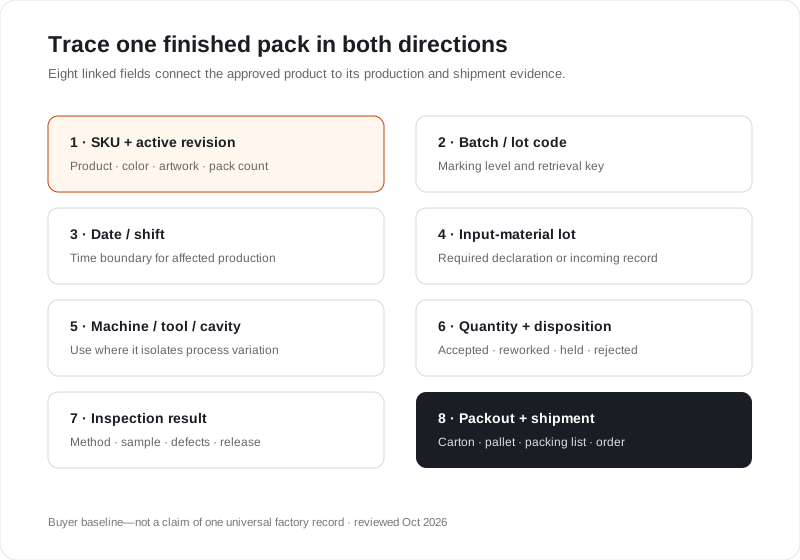
- SKU and active revision for product, color, artwork and pack count.
- Batch or lot code printed or labelled at the agreed unit, bag or carton level.
- Production date or shift with enough precision to isolate the affected run.
- Input-material lot connected to the supplier declaration or incoming record required by the PO.
- Machine, mold, tool or cavity when that identifier helps isolate variation.
- Quantity and disposition for produced, accepted, reworked, held and rejected goods.
- Inspection result with method, sample result, defect record and release decision.
- Packout and shipment reference connecting the lot to cartons, pallet, packing list and customer order.
These eight fields are a buyer-oriented baseline, not a claim that every factory or product must use an identical record. Add regulatory, safety, expiry or customer fields where the actual product requires them.
Batch Code vs Product Identifier
The SKU says what the item is. The batch says which production group it belongs to. A purchase order says what the buyer ordered. Traceability depends on connecting all three rather than replacing one with another.
The GS1 Application Identifier directory defines AI (10) as batch or lot number. GS1 notes that the value associates a trade item with manufacturer-relevant traceability information and is not part of the trade item's unique identification. A buyer using GS1 data should still define which internal records the lot code retrieves.
Test Backward and Forward Traceability
Select one finished bag or carton. Retrieve its SKU revision, production lot, input-material record, process identity and inspection release.
Select one material or production lot. Identify every accepted, held, packed and shipped quantity plus each customer or order reference.
Record the request, retrieved records, missing links and time required. A spreadsheet full of fields is not useful if the printed code cannot retrieve the affected shipment scope.
Define Retention, Access and Code Changes
A traceability clause should state how long records remain available, who may request them and what evidence can be shared without exposing unrelated customer information. Choose the retention period from the product, customer agreement, market rules, warranty or expected claim window; one universal number does not fit every order.
Also define when a new lot code is created. A new material lot, mold repair, color change, artwork revision, rework event or production restart may need a separate identity depending on the risk and buyer specification. If two conditions remain under one code, the underlying record still needs enough detail to isolate their quantities.
Tie the Lot to the Approved Sample and Inspection
The lot record should identify which approved sample revision and written specification were active. The inspection report should identify the same lot, SKU and revision, with sample results and a pass, rework or reject decision.
If the product, color, packaging or mold changes, the OEM order change record should state the first affected lot. This prevents old and new revisions from sharing an unexplained code.
Put Traceability Requirements in the PO
State the code format or required data, marking level, record fields, retention period, retrieval test, access rights and response expectation. Use the tile leveling system purchase order checklist to connect those records to inspection and remedies.
Ask a tile leveling system OEM manufacturer for a sample record before placing the order. Compare the response with the exact fields required by your market and customer.
Frequently Asked Questions
What fields should a manufacturing batch record contain?
A practical buyer baseline uses eight linked fields: product SKU/revision, lot code, production date or shift, input-material lot, machine/tool/cavity where relevant, quantity and process disposition, inspection result, and packaging/shipment reference. Adapt the fields to the product, regulation and contract.
Is a batch number the same as a serial number?
No. A batch or lot number can associate multiple items with shared production information, while a serial number identifies one individual item. GS1 Application Identifier (10) carries a batch or lot number and does not make it a unique trade-item identifier.
Does ISO 9001 automatically require every supplier to use the same lot code?
No. A quality-management standard does not create one universal code format or record set for every product. The applicable regulation, customer specification, organizational controls and traceability risk determine what must be identified and retained.
How do I test whether a supplier's traceability works?
Choose one finished carton or bag and ask the supplier to trace backward to the SKU revision, production lot, input-material record and inspection result, then trace forward from that lot to all affected packed and shipped quantities. Record missing links and retrieval time.
Define the Record Before the Order
Send the SKU, customer requirements and required traceability depth for a record-scope review.
Request a sample batch record →