
Bottom line: freeze the receipt before put-away, reconcile every SKU in a consistent unit of measure, and keep disputed quantities on hold until identity, condition and commercial disposition are written down.
Why Tile Leveling Shipment Receiving Needs Its Own Control
Pre-shipment inspection answers whether an agreed sample of finished goods met defined release criteria before dispatch. Receiving answers a different question: what physically arrived, in what condition, and which quantity can enter saleable inventory. A passed inspection report does not prove that every carton survived transport or that the final delivery contains the documented SKU mix.
Keep receiving separate from the final warranty decision. The warehouse should record facts without deciding whether the supplier, carrier, insurer or buyer bears the cost. That responsibility depends on the purchase agreement, delivery term, transport evidence and applicable law. The receiving record is the factual base that a later warranty or claims process will work from.
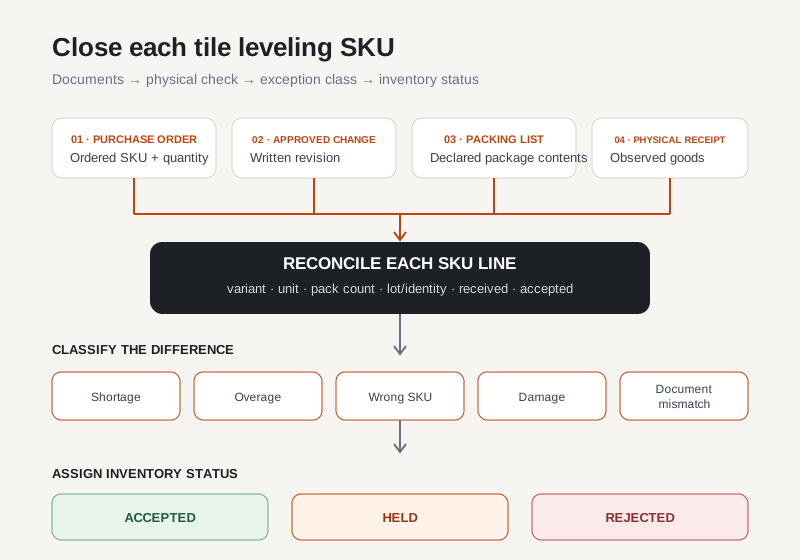
The 7-Check Tile Leveling Shipment Receiving Checklist
- Freeze the receiving cutoff. Record arrival date/time, receiving location, carrier or container reference, seal where applicable, and the document revisions available when counting begins.
- Preserve arrival condition. Photograph the unopened load, pallets, carton marks, visible damage and any seal or handling exception before goods are dispersed.
- Count logistics units. Count pallets and cartons using SSCC, pallet ID, carton mark or another controlled identifier. Record unidentified and duplicate labels as exceptions.
- Reconcile four layers. Compare the PO, approved changes, final packing list or despatch advice, and the physical receipt.
- Verify contents by SKU. Check clip joint width and tile-thickness range, matching wedge or cap, spacer size, plier or kit contents, unit of measure, pack count, lot identity where required, and the quantity opened under the receiving plan.
- Classify every difference. Keep shortage, overage, wrong SKU, physical damage and document mismatch as separate lines.
- Assign status and disposition. Record accepted, held or rejected quantity, storage location, owner, next action and the written decision when resolved.
Reconcile 4 Records, Not One Shipment Total
| Layer | What it controls | Receiving question |
|---|---|---|
| Purchase order | Contracted SKU, quantity, pack and requirements | What did the buyer order? |
| Approved change | Authorized substitution or quantity revision | What changed in writing? |
| Packing list / advice | Declared package contents, weights and measures | What did the shipper say was dispatched? |
| Physical receipt | Observed identity, quantity and condition | What actually arrived and is usable? |
The U.S. International Trade Administration states that a packing list itemizes the contents of each box, pallet or other package and includes weights, measurements and detailed goods. Use it as a declared shipment record, then verify it against the physical receipt. It does not replace the PO or prove that every listed item arrived.
Use one unit consistently on each comparison line. If the PO is in bags, the carton label is in pieces and the packing list is in cartons, record the conversion explicitly. For example, do not treat “10 cartons” as a closed count until the approved pieces or bags per carton and the physical pack count agree.
5 Discrepancy Classes Prevent Double Counting
Shortage is an expected clip, wedge, spacer or kit quantity that was not received. Overage is a received quantity above the approved amount. Wrong SKU or variant includes the wrong clip joint width, tile-thickness range, spacer size, wedge profile, color or kit configuration. Damage affects condition and saleability. Document mismatch means the records disagree even if the physical count is not yet proven wrong.
Keep these classes separate. A crushed carton containing the wrong clip width may create both a condition exception and an identity exception, but the same units should not be subtracted twice from inventory. Record gross received quantity, held quantity and accepted quantity so finance and the supplier can follow the same denominator.
Use Logistics Identity Without Making It Mandatory
The GS1 Logistic Label Guideline identifies the Serial Shipping Container Code (SSCC) as the unique identifier for a logistic unit. GS1 explains that scanning it can connect physical movement with the electronic messages that describe the shipment; a despatch advice may link each SSCC to its contained trade items.
SSCC is useful when the buyer and supplier operate that system, but do not claim every tile-tool order already uses it. A smaller shipment can still be controlled with unique pallet IDs, carton marks or receiving labels. The requirement is an unambiguous link between the physical unit and its receipt record. For private-label programs, align this identity with the fields in the OEM batch traceability checklist.
3 Inventory States: Accepted, Held, Rejected
Accepted quantity has passed the defined receiving checks and may enter available inventory. Held quantity remains physically controlled while identity, count, testing or responsibility is unresolved. Rejected quantity has a written decision under the applicable purchase and claims process.
A quarantine label should show the case reference, SKU, quantity, reason, date and owner. Do not relabel, rework, dispose of or return disputed goods before preserving the evidence required by the contract, carrier, insurer or supplier. The decision can then specify release, correction, replacement, credit, return or disposal without losing the link to the original receipt.
Close Quantity, Inventory and Cost Together
Once disposition is agreed, update three records from the same case: inventory quantity/status, supplier or carrier claim status, and the financial record. Saleable units received may also change the unit result in the buyer’s landed-cost worksheet.
Feed recurring exceptions back into purchasing. Add unclear pack conversions, weak carton marks or missing change approvals to the next tile leveling system purchase order. Compare the receiving record with the pre-shipment inspection report to locate where the difference first became visible.
Frequently Asked Questions
What should a tile leveling shipment receiving checklist include?
Use seven checks: freeze the receiving cutoff, preserve arrival condition, count logistics units, reconcile four document layers, verify clip, wedge, spacer or kit contents by SKU and unit, classify each discrepancy, and assign accepted, held or rejected inventory status with an owner and next action.
Which documents should be compared when a shipment arrives?
Compare the purchase order, approved changes or supplier confirmation, final packing list or despatch advice, and the physical receipt. Use the commercial invoice and transport record to investigate differences, but do not let a shipment-level total replace SKU-level reconciliation.
How should shortages and damaged goods be recorded?
Record them separately. A shortage compares expected and received quantities by SKU and unit; damage records the affected logistics unit or carton, condition, photos, quantity inspected and accepted quantity. Link both records to the PO, packing list and receipt date.
Should a warehouse put away goods before reconciliation is complete?
Conforming quantities may be released under the buyer's receiving procedure, but unidentified, wrong-SKU, damaged or disputed goods should remain in a controlled hold location until a written disposition assigns release, rework, relabeling, return, credit or disposal.
Send the SKU schedule, pack structure, labels and destination workflow so the quotation and packing records use the same identity.
Build a Traceable Wholesale Order →