
OEM Production Change Notification for Plastic Tile Tools
Identify the change, affected models and lots, evidence, inventory disposition, effective point and written approval.
ZEBRA supplies plastic tile tools from China for OEM brands, importers and distributors. This OEM production change notification guide explains how those buyers can control a supplier-initiated change to material, mold, process, sub-supplier, manufacturing location or packaging before it enters an approved order.
Bottom line: do not approve the phrase “same product, small change”; approve an identified before-and-after condition, evidence package and effective lot.
The 10-Field OEM Production Change Notification
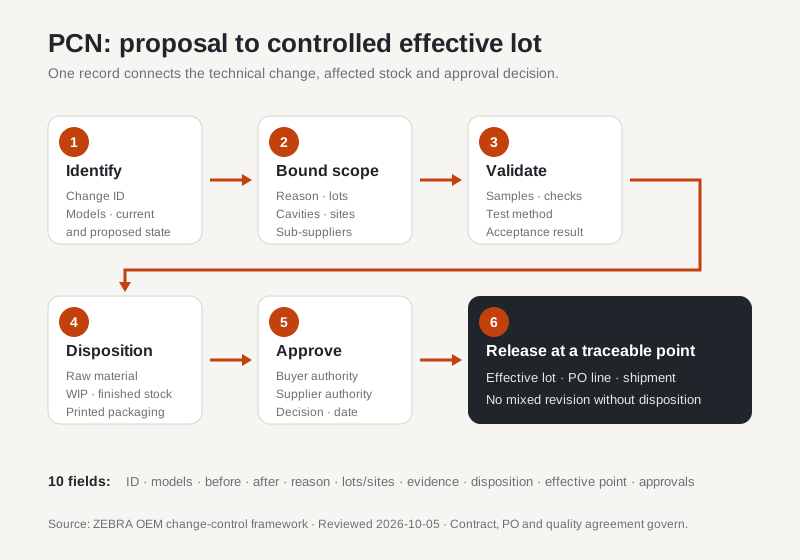
- Change ID: one unique reference used in messages, samples and approvals.
- Affected models: model, thickness, color, pack or drawing revision within scope.
- Current condition: the approved material, process, tooling, site or package.
- Proposed condition: the exact replacement or revision.
- Reason: capacity, availability, quality improvement, corrective action or another documented cause.
- Affected lots and locations: production line, sub-supplier, mold cavity and traceability boundary where relevant.
- Validation evidence: samples, measurements, functional results, packaging review or specified test.
- Existing inventory disposition: use, segregate, rework, return or scrap.
- Effective point: proposed date, lot, PO line or serialised logistics unit.
- Approvals: named supplier and buyer authorities, decision and date.
Which Plastic Tile Tool Changes Need Review?
Start with the approved product specification and ask whether the proposed change could affect identity, dimensions, fit, break behaviour, surface condition, color, traceability, packout or buyer claims. A resin source change may require different evidence from an artwork revision, but both can matter when the buyer approved the original condition.
Typical triggers include polymer grade or formulation, colorant, mold insert or cavity, processing equipment, parameter window, manufacturing location, secondary operation, sub-supplier, measurement method, product dimensions, packaging material, artwork, barcode data, quantity per pack and carton configuration. As one published buyer-specific example, Creation Technologies' supplier requirements include composition, equipment, location, process, sub-tier, labelling, packaging and shipping-method changes in its notification scope. That document governs its own suppliers; the agreed ZEBRA buyer trigger list must be written for the actual product and market.
Separate Supplier PCNs From Buyer Order Changes
A supplier PCN begins because the manufacturer proposes a different approved condition. A buyer order change begins because the customer changes quantity, color, packaging, artwork, destination or timing. Both need revision control, but responsibility, cost and inventory disposition can differ.
Use the existing OEM order change process for buyer-requested scope changes. Use a PCN for supplier-originated changes, and cross-reference both records if one change causes the other.
Validation Must Match the Change Risk
Do not attach every available certificate to every change. Define what could change, then select evidence that measures that effect. A mold insert change may need dimensional comparison, fit testing and representative production samples. A resin change may need material identity, processing review and the product tests named by the buyer. An artwork change may need controlled PDF approval, printed sample review and barcode verification where required.
Record sample identity, model, lot or trial run, method, conditions, result and acceptance criterion. A test result without a link to the changed model or lot cannot close the traceability question. The approved sample process provides a physical and documentary reference when a new condition is accepted.
Control the Effective Lot and Old Inventory
Approval is incomplete until the record states where the new condition begins. Use a production lot, PO line, shipment, dated batch or another traceable boundary that both sides can verify. The OEM batch traceability fields can connect the accepted change to later cartons and receiving records.
Count current raw material, work in process, finished products and printed packaging. Decide whether each stock group may be consumed, needs segregation, requires relabelling or cannot ship. A new effective date without old-stock disposition allows mixed revisions to reach one order.
There Is No Universal PCN Notice Period
Some supply chains prescribe advance notice periods, but plastic tile tools do not have one universal PCN timetable. Set the notice period in the quality agreement according to replenishment time, validation work, regulated-market obligations and inventory exposure. Also define the emergency path for events such as material discontinuation or equipment failure.
State whether silence counts as rejection, whether written buyer approval is mandatory and who has authority to approve. Without those rules, a supplier may treat notification as permission while the buyer treats it as a request.
Put Change Control Into the RFQ and Purchase Order
Before production, name the controlled drawing, model, material or declared material scope, approved sample, packaging revision and traceability fields. Add the PCN trigger list, notification route, evidence expectations, approval authority and effective-lot rule to the quality agreement or purchase order.
Send that scope to the tile leveling system OEM manufacturer during quotation, while the parties can still define evidence and timing without interrupting live production.
Frequently Asked Questions
What is an OEM production change notification?
An OEM production change notification is a controlled record from a supplier that identifies a proposed product or process change, affected models and lots, before-and-after condition, validation plan, inventory disposition, proposed effective point and required approvals.
Which changes should an OEM tile tool supplier report?
The quality agreement should define the trigger list. Common review triggers include resin grade or source, formulation, mold or cavity, production equipment, process location, sub-supplier, dimensions, color, printed artwork, pack count, label and shipping configuration when those items affect the approved scope.
Does every supplier change require a new laboratory test?
No. The buyer and supplier should assess what the change could affect, then document the required sample, dimensional check, functional trial, packaging review or laboratory test. A change does not justify an unrelated test, while an approval email without relevant evidence may be insufficient.
How much advance notice is required for an OEM production change?
There is no universal notice period for all plastic tile tools. The contract, purchase order or quality agreement should define the required timing, emergency process, approval authority and whether the supplier may implement a change before written acceptance.
Define the Change Rule Before Production
Share the affected models, approved condition and evidence expectations with our OEM team.
Discuss an OEM control plan →